
Short answer: the combined pill reduces the effect of androgens, hormones that stimulate your oil glands. When you stop taking it, your own hormones take over again. Your skin may become oilier and more prone to breakouts, often in the first few months and around your chin and jawline. Sometimes, it’s simply the skin you had before the pill returning. A gentle routine, patience and the right nutrients can help you through the change.
You stop taking the pill. Maybe you want to get pregnant, it no longer felt right for you, or you want to try something else. Then, a few weeks or months later, you see them in the mirror: spots. Sometimes more than you ever had, even as a teenager. It’s frustrating, and it feels unfair. Here’s why it happens, how long it usually lasts and what you can do.
At a glance
- The combined pill reduces the effect of androgens, often reducing oil production too.
- When you stop, your own hormones take over again. Your skin may become oilier and more prone to breakouts.
- Breakouts often start within a few months and appear on your chin, jawline and cheeks.
- A simple skincare routine and the right nutrients each day can help you through the change.
- You don’t need to rush back to the pill, but see your GP if you have a lot of painful spots.
What the pill does to your skin
To understand what happens when you stop, it helps to know what the pill was doing. The regular pill is also called the combined pill. It contains two hormones: a type of oestrogen and a type of progestogen. Together, they prevent pregnancy.
But the pill does more than that. It also changes the balance of other hormones in your body, particularly androgens. Androgens are hormones such as testosterone. Women have them too, just in smaller amounts than men. They have a big influence on your skin because they prompt your oil glands to produce sebum. Sebum is the oily substance that keeps your skin supple. But too much of it can make pores clog more easily.
The combined pill reduces the effect of androgens in two ways:
- Your ovaries produce fewer androgens. Because you don’t ovulate, your ovaries are less active.
- More binding protein in your blood. The pill prompts your liver to produce more SHBG, a protein that binds to testosterone. Bound testosterone has less effect on your skin.
That’s why many women find their skin looks calmer while taking the pill. According to Thuisarts, GPs sometimes even prescribe the combined pill to women with frequent spots who also want contraception. Read more in Androgens and your skin.
What happens when you stop
When you stop taking the pill, those effects wear off. Your ovaries become active again, and the amount of SHBG in your blood returns to your own baseline. That leaves more free testosterone able to reach your oil glands.
It’s a big change for your skin. Your oil glands may have been kept relatively quiet for years, and suddenly they’re getting the full signal again. The result can be oilier skin, more clogged pores and more spots. They often appear on the lower part of your face, including your chin, jawline and cheeks.
There’s another factor too. Your menstrual cycle needs to restart after you stop. It may be irregular for the first few months. As your cycle fluctuates, so do your hormones — and often your skin.
“But my skin wasn’t this bad before the pill”
We hear that a lot. There are two reasons it might seem worse now than it used to.
The pill may have hidden what your skin is naturally like. Many women start taking it as teenagers, right when spots often begin. So you may never have seen how your adult skin behaves without it. What you’re seeing now isn’t necessarily “worse” — it may simply be your skin without the pill’s effects.
It’s a transition. After you stop, your hormones work towards their own balance again. They can fluctuate quite a bit in the meantime. For many women, skin is most prone to breakouts in the first few months. How long it lasts varies: a few months for some, longer for others.
- When does it start?
- Often within a few months of stopping, sometimes after just a few weeks.
- Where does it usually appear?
- On your chin, jawline and cheeks. Sometimes on your back or chest too.
- What might you notice?
- Oilier skin, more blackheads and spots, and sometimes more hair growth or an irregular cycle.
- How long does it last?
- It varies from person to person. Think months, rather than weeks.
What about the hormonal coil or mini pill?
Not all contraception affects your skin in the same way. If you switch from the combined pill to something else, you may notice a difference.
- The hormonal coil releases a progestogen but no oestrogen. This means much of the pill’s effect on androgens through SHBG is lost. Some women find their skin becomes more prone to breakouts after switching.
- The mini pill also contains only a progestogen. According to Thuisarts, it is less effective against spots than the combined pill.
- The copper coil contains no hormones. Your own cycle and hormones take over fully, just as they do when you stop taking the pill.
Not sure which contraception is right for you? Talk to your GP. They can take your skin into account too.

What you can do
It’s tempting to try everything at once: new cleansers, acids, masks. But skin that already feels out of balance often needs a gentler approach. Here’s what can help:
- Keep your routine simple. A gentle cleanser, a light oil-free moisturiser and sunscreen. Adding more layers can leave blemish-prone skin feeling even more unsettled.
- Don’t wash too often or too vigorously. Twice a day with lukewarm water is enough. Scrubbing irritates your skin and doesn’t help.
- Leave spots alone. Squeezing and picking can make them bigger and redder, and may leave scars or dark marks.
- Track your cycle. Note when you have your period and what your skin is like. It can help you spot patterns and compare changes over time.
- Make time for sleep and rest. Stress prompts your body to produce more cortisol, and this can often show up in your skin too.
- Take photos. One a month, in the same light. Day-to-day changes can be hard to see, but you may notice a difference over months.
Why you can support your skin from within
What happens after you stop taking the pill starts inside your body. Your hormones change, and your skin responds. Creams work on the outside. They can be useful, but they don’t reach where the change begins.
Your body needs certain nutrients every day for your skin and hormones. Zinc is one of them. Zinc contributes to the maintenance of normal testosterone levels in the blood. It also supports your skin: zinc contributes to the maintenance of normal skin. Vitamin B5, also known as pantothenic acid, is another. Pantothenic acid contributes to normal synthesis and metabolism of steroid hormones, vitamin D and some neurotransmitters. Steroid hormones include sex hormones.
You get some of these nutrients from food. Zinc is found in meat, fish, cheese, wholegrains and nuts, for example. But if you eat little meat, or life is busy and you don’t eat a varied diet every day, you may not always get enough.
After I stopped taking the contraceptive pill, my skin became prone to breakouts. I tried all sorts of vitamins and minerals, but it didn’t really get better. Now, after 3 months of clearday, my skin is finally calmer. It’s so nice to only have to take this instead of lots of different things.
Femke B. · 31 January 2026
Where Clear+ fits in
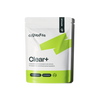
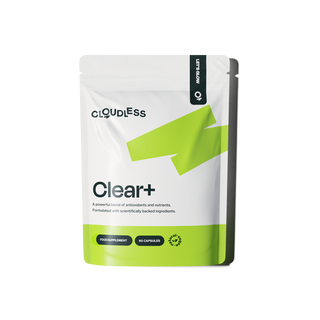
Clear+ is made for periods just like this. Two capsules a day give you ten ingredients, with zinc, vitamin A and vitamin B5 at the core. There’s also 200 mg of spearmint, plus vitamins and minerals including vitamins C, E and D3, selenium and copper. For a closer look at what research does and doesn’t show about spearmint, read Spearmint and blemish-prone skin.
If you’ve recently stopped taking the pill, Clear+ has a few practical benefits:
- It contains no hormones. Clear+ is a food supplement with vitamins, minerals and a plant extract. It isn’t contraception and doesn’t work like the pill.
- One routine, not ten different bottles. As Femke says, you don’t have to put together lots of separate vitamins.
- It fits your skin’s pace. Your skin needs time, and so do your hormones. That’s why we give it 90 days.
If it’s your first Clear+ order, you’re covered by our 90-day satisfaction guarantee. Take it every day for 90 days. If you’re not satisfied after that, contact us between day 90 and day 100 and return all the pouches. We’ll refund what you paid, minus the cost of the return label.
And if it’s going well? You don’t have to stop on day 90. Your skin makes new cells every day, and your body doesn’t store a large reserve of zinc. That’s why many women make Clear+ part of their morning routine, just like brushing their teeth. With a subscription, your next pouch arrives on time and you save 20%.
Do you need to go back on the pill?
It’s a question many women ask when their skin suddenly becomes prone to breakouts. The honest answer: not necessarily. And it isn’t a decision to make based on your skin alone. You stopped for a reason, and that reason still matters.
If you want to use contraception again and your skin is part of the decision, talk to your GP. They can help you understand your options and what suits you.
When to see your GP
You can manage most skin changes after stopping the pill yourself. But make an appointment with your GP if:
- you have a lot of painful, deep or large spots;
- spots are leaving scars or dark marks;
- your cycle is still very irregular after a few months, or your periods have stopped completely;
- you notice much more hair growth, for example on your chin, upper lip or stomach;
- your skin is seriously affecting your confidence or mood.
An irregular cycle alongside increased hair growth and spots can sometimes be a sign of PCOS. Your GP can investigate. You can still use Clear+ alongside any care you receive, but let your GP know if you’re prescribed medication.
More about Clear+
Clear+ at a glance
- Zinc, vitamin A and vitamin B5 at the core, with spearmint
- No hormones, just two capsules with breakfast
- Vegan, tested by Eurofins and made in the Netherlands
- 90-day satisfaction guarantee on your first order
Frequently asked questions
Why am I getting spots after stopping the pill?
The combined pill reduces the effect of androgens, hormones that stimulate your oil glands. When you stop taking it, that effect wears off. Your skin often produces more oil, which can clog pores more easily and lead to more spots.
How long do spots last after stopping the pill?
It varies from person to person. Skin is often most prone to breakouts in the first few months, while your hormones find their own balance. Think months rather than weeks, and give your skin and your routine time.
I didn’t get spots while taking the pill. Why is that?
The pill probably kept your oil production down. If you started taking it as a teenager, you may never have seen how your adult skin behaves without it.
Can the hormonal coil cause spots?
It can. The hormonal coil contains a progestogen but no oestrogen, so it reduces the effect of androgens less than the combined pill. Some women find their skin becomes more prone to breakouts after switching; others notice no change.
Can I use Clear+ after stopping the pill?
Yes. Clear+ contains no hormones and isn’t contraception. If you’re trying to get pregnant, are pregnant or are breastfeeding, speak to your GP or midwife first. Clear+ contains vitamin A, and different supplement guidance applies during this time.
Can I use Clear+ while taking the pill?
Yes. Clear+ is a food supplement containing vitamins, minerals and plant extracts, and you can take it alongside the pill. Don’t take another supplement containing zinc or vitamin A at the same time. If you’re unsure about your situation, ask your pharmacist.
What if I’m not satisfied?
You can get your money back. For your first order, take Clear+ every day for 90 days, then contact us between day 90 and day 100. You’ll find all the terms in our refund policy.
This article is for general information and isn’t medical advice. If you’re struggling with your skin or your cycle, see your GP. Clear+ is a food supplement. A food supplement is not a substitute for a varied, balanced diet and a healthy lifestyle.
Sources
- Thuisarts.nl (NHG). I have acne and my GP is prescribing medication. thuisarts.nl
- Thuisarts.nl (NHG). Contraception. thuisarts.nl
- Thuisarts.nl (NHG). Polycystic ovary syndrome (PCOS). thuisarts.nl
- NHG Contraception Guideline. richtlijnen.nhg.org
- Voedingscentrum. Encyclopaedia: zinc. voedingscentrum.nl
- European Commission. EU Register of nutrition and health claims made on foods. ec.europa.eu
 Excellent on Trustpilot