

Short answer: no single food causes spots or makes them disappear. Research does suggest that eating a lot of refined sugar or drinking a lot of milk may be linked to more breakouts for some people. But it varies from person to person, and the evidence is limited. A healthy, varied diet is the best starting point for your skin. If you notice a food seems to make your skin worse, try leaving it out for a while. And remember, your skin needs more than a good diet: hormones, sleep and a consistent routine matter too.
You've probably heard it all before. Cut out chocolate. Give up dairy. Eat less sugar. Drink more water. Maybe you've even tried it, sticking to a strict diet for weeks. Sometimes it helped a little. Often it didn't. So what does food really have to do with your skin? Here, we look at what the research does and doesn't show, and what you can do with that information.
In brief
- According to Thuisarts, no single type of food causes spots.
- Research does find a link between lots of refined sugar or milk and more spots for some people.
- Strict diets are rarely necessary, and they can leave you short of nutrients.
- A varied diet is the foundation: your skin needs nutrients including zinc, vitamin A and protein.
- Food is one factor. Hormones, sleep and stress matter at least as much.
What do GPs say?
Let's start with the GPs. According to Thuisarts, a website by Dutch GPs, sweets or any particular food or drink don't cause spots. They also say there's no good research showing that a particular diet helps.
But Thuisarts also says this: if you notice you get more spots every time you eat something, you can try avoiding it for a while. Just make sure you still eat a healthy diet.
That's a fair summary. For most people, food isn't the cause. But for some, certain foods do seem to make a difference. What's going on?
Sugar and refined carbohydrates
Refined carbohydrates are foods that make your blood sugar rise quickly. Think white bread, fizzy drinks, sweets, biscuits, white rice and many breakfast cereals. When your blood sugar rises quickly, your body produces a lot of insulin. Insulin interacts with other hormones that stimulate your oil glands.
In a well-known Australian study, young men followed a diet low in refined carbohydrates for twelve weeks. By the end, they had fewer spots than a group who ate as usual. But it was a small study, and the men on the diet also lost weight. So it's hard to know exactly what made the difference.
The takeaway? Eating less refined sugar isn't a bad idea. It may help your skin, and it has benefits for the rest of your body. But one biscuit won't cause a spot.
Milk and dairy
Dairy is perhaps the most talked-about food when it comes to skin. Several large studies have found a link between drinking a lot of milk and having more spots, particularly among teenagers. Interestingly, in some of those studies, the link was strongest for skimmed milk and weaker for cheese and yoghurt.
Researchers aren't yet sure why. Milk naturally contains hormones and proteins that prompt your body to make more of a growth factor called IGF-1. IGF-1 also stimulates your oil glands.
It's worth remembering that these studies show a link, not a cause. People who drink a lot of milk may have other lifestyle differences too. And plenty of people drink milk without noticing any effect on their skin.
Want to see if it makes a difference for you? Try drinking less milk for a few weeks. Make sure you still get enough calcium, for example from cheese, yoghurt or calcium-fortified foods. Calcium is especially important for teenagers' bones.
Protein shakes, chocolate and greasy snacks
- Protein shakes. Whey protein comes from milk. Some people who work out notice their skin breaks out more when they have a lot of shakes. The research is still limited. If you notice a difference, try another type of protein for a while.
- Chocolate. The idea that chocolate causes spots has stuck around, but the research doesn't give a clear answer. Dark chocolate contains less sugar and milk than milk chocolate.
- Greasy food. Chips and crisps don't make your face produce more oil. But greasy fingers on your face won't help either.
- Water. Drinking enough is good for your whole body. But drinking litres of extra water won't suddenly clear your skin.

Why strict diets often don't work
When your skin is blemish-prone, it can be tempting to cut out everything at once. No sugar, no dairy, no gluten. But that usually doesn't work as well as you'd hope. Here's why:
- You won't know what helped. If you cut out five things at once and your skin improves, you won't know what made the difference.
- Your skin needs time. A spot takes weeks to develop. You won't see much after just one week of eating differently. It's easy to give up at that point, or become even stricter.
- You may miss out on nutrients. Cut out whole food groups, such as dairy or grains, and you could miss out on calcium, protein, fibre or zinc.
- It's hard to stick to. A diet you abandon after three weeks won't do anything in the long run.
- It adds stress. Every bite becomes a decision. And stress can show up on your skin too.
I've had really bad skin for about a year. I've tried everything, all sorts of creams and cleansers, less lactose, no sugar, honestly everything. Nothing helped. Then I came across Cloudless and thought, this probably won't work either, but I might as well try it. In less than 2 weeks I already noticed a world of difference. … I've now been using it for just over a month and I'm still really happy with it. I'd definitely recommend this product.
Julie · 7 July 2025
How to find out whether food affects your skin
Want to know if something you eat affects your skin? Take a measured approach. Here's how:
- Track what you eat for two weeks. Note how your skin looks too. Keep a record of your cycle, sleep and busy days.
- Pick one thing to test. Milk or fizzy drinks, for example. Not everything at once.
- Leave it out for six to eight weeks. A shorter trial isn't very useful, as your skin renews itself in around four weeks.
- Compare photos. Take one on day 1 and another after six weeks, in the same light.
- Bring it back. Does your skin get worse again? Then it may be a factor for you. If not, you can go back to eating it.
What your skin does need
Instead of focusing only on what to cut out, think about what your skin needs. A few nutrients are particularly important:
- Zinc
- Found in meat, fish, shellfish, cheese, wholegrains, nuts and pulses.
- Vitamin A
- Found in dairy, eggs and fish. Your body also makes it from the beta-carotene in carrots, sweet potatoes and spinach.
- Vitamin C
- Found in peppers, kiwi fruit, oranges, strawberries and broccoli.
- Protein
- Found in fish, meat, eggs, dairy, beans, lentils and tofu.
Zinc contributes to the maintenance of normal skin. If you follow the Dutch Wheel of Five dietary guidelines, you'll get plenty of the basics from your food. In practice, though, hardly anyone eats that way every day. A busy week, eating little meat or grabbing food on the go can get in the way.
"Can't I just get it from my food?"
It's a fair question. And the answer is: some of it, yes. A healthy diet is always the foundation, whether you take a supplement or not. But there are two things that aren't easy to get from food alone.
Certain amounts. You get around 5 mg of vitamin B5 a day from food. That's enough for your basic needs. Clear+ contains 500 mg as part of a formula focused on your skin. You won't get that amount from a typical diet. The same goes for 200 mg of spearmint extract.
Consistency every day. Your skin makes new cells every day and needs nutrients every day. Your body doesn't store large amounts of zinc. Some days your diet provides what you need; other days, less so. A supplement gives you the same foundation each day, even during busy weeks.
Where Clear+ fits in
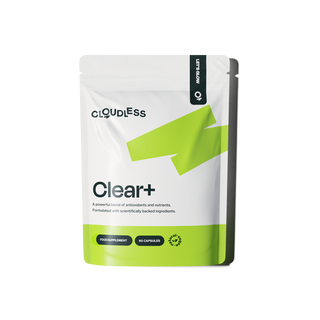
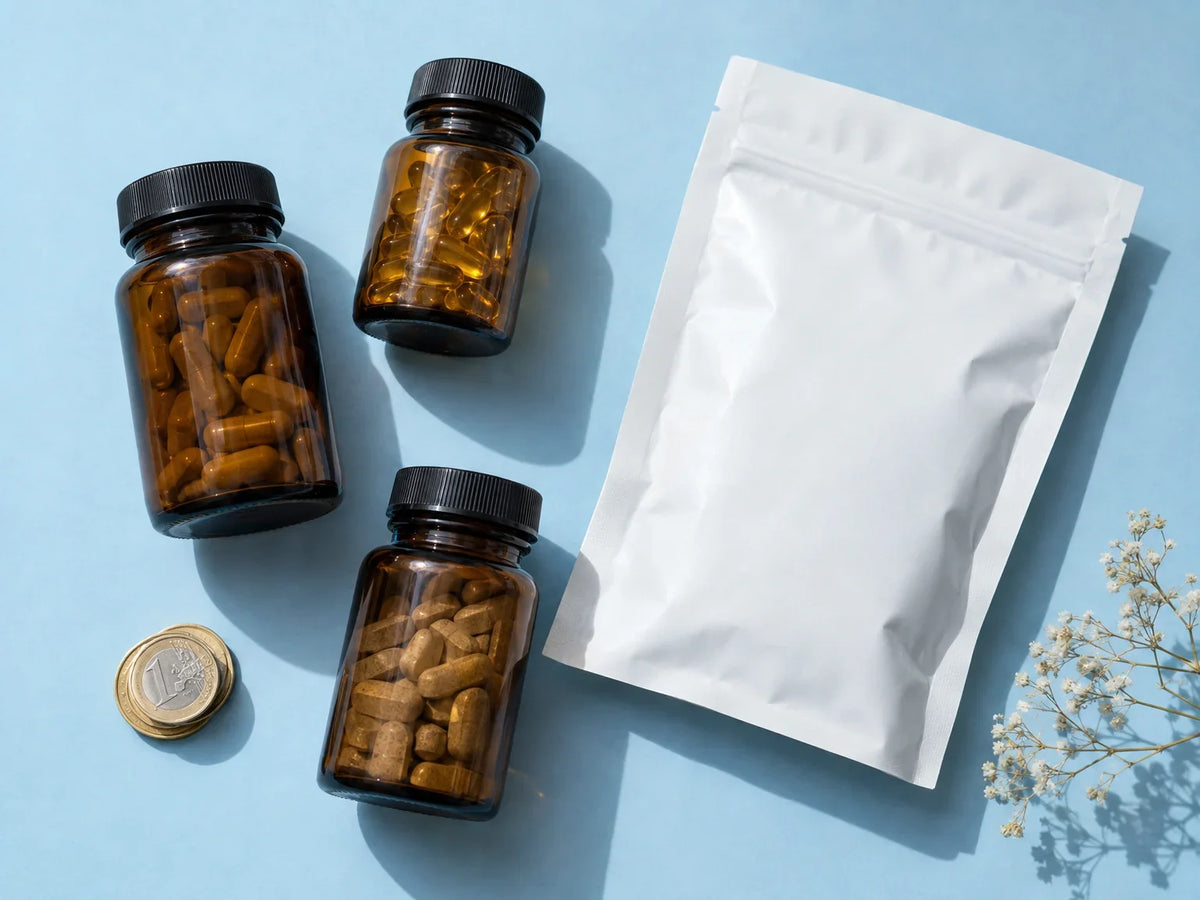
Clear+ doesn't replace food; it complements your diet. Two capsules a day contain ten ingredients, with zinc, vitamin A and vitamin B5 at the heart of the formula. There's also spearmint, vitamins C, D3 and E, selenium, copper and black pepper extract. Clear+ is vegan, and you can open the capsules and stir the contents into yoghurt or a smoothie.
So you can keep eating the foods you enjoy as part of a healthy, varied diet, without analysing every bite. Julie had already tried cutting back on lactose and giving up sugar, without success. She noticed a difference when she added Clear+.
If it's your first time ordering Clear+, take it every day for 90 days. If you're not happy after that, let us know between days 90 and 100 and return all the pouches. We'll refund what you paid, minus the cost of the return label. And if it works for you? Make it a regular part of your day, like breakfast. A subscription means a fresh pouch arrives when you need it, with 20% off.
When to see your GP
See your GP if you have a lot of painful or deep spots, if your skin is leaving scars, or if it's seriously affecting your confidence. If you want to make major changes to your diet, or you've already cut out a lot of foods, speak to your GP or a dietitian to make sure you're getting enough nutrients. That's especially important for teenagers.
More about Clear+
Clear+ at a glance
- A targeted addition to a healthy diet, with zinc and vitamins A and B5
- Two capsules a day, which you can also open into yoghurt or a smoothie
- Vegan, tested by Eurofins and made in the Netherlands
- 90-day satisfaction guarantee on your first order
Frequently asked questions
Does sugar cause spots?
Not one biscuit, no. Research does suggest that lots of refined sugar and carbohydrates may be linked to more spots for some people. Eating less refined sugar is generally a good idea, but a strict sugar-free diet usually isn't necessary.
Is dairy bad for your skin?
Not for everyone. Some studies have found a link between drinking a lot of milk and having more spots. In some of those studies, the link was strongest for skimmed milk. It's weaker for cheese and yoghurt. If you want to test it for yourself, try drinking less milk for six to eight weeks and make sure you get enough calcium.
Does chocolate cause spots?
There's no clear evidence that it does. Milk chocolate does contain a lot of sugar and milk. If you notice a pattern, try dark chocolate or eat less chocolate for a while.
Does drinking lots of water help with spots?
Drinking enough is good for your whole body, but extra water won't clear your skin. Around one and a half to two litres a day is enough for most adults.
Do I need a supplement if I eat healthily?
A healthy diet is the foundation. Clear+ is a targeted addition, with amounts that aren't easy to get from food, such as 500 mg of vitamin B5. It also gives you the same foundation every day, even during busy weeks.
What if I'm not happy with it?
You can get your money back. For your first order, take Clear+ every day for 90 days, then let us know between days 90 and 100. You can find all the conditions in our refund policy.
This article is for general information and isn't medical advice. If your skin is causing you significant concern, see your GP. Clear+ is a food supplement. A food supplement is not a substitute for a varied, balanced diet and a healthy lifestyle.
Sources
- Thuisarts.nl (NHG). I have spots (acne). What can I do? thuisarts.nl
- Voedingscentrum. Healthy eating with the Wheel of Five. voedingscentrum.nl
- Voedingscentrum. Encyclopaedia: pantothenic acid. voedingscentrum.nl
- Voedingscentrum. Encyclopaedia: zinc. voedingscentrum.nl
- Smith RN et al. (2007). A low-glycemic-load diet improves symptoms in acne vulgaris patients: a randomized controlled trial. American Journal of Clinical Nutrition 86(1):107–115.
- Juhl CR et al. (2018). Dairy intake and acne vulgaris: a systematic review and meta-analysis of 78,529 children, adolescents, and young adults. Nutrients 10(8):1049.
- European Commission. EU Register of nutrition and health claims made on foods. ec.europa.eu

 Excellent on Trustpilot